
Clinical Research Facility: Exeter

Introducing the DROPLeT research study
26 November 2019
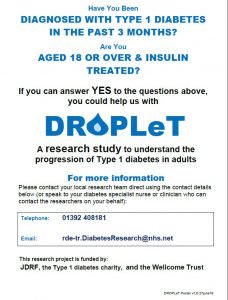
The droplet study funded by JDRF and the Wellcome Trust is investigating the progression of Type 1 diabetes in adults.
Type 1 diabetes occurs when the body’s immune system destroys the cells that make insulin. It has often been thought of as a disease of young people, but recent work has shown that about half of cases occur after age 30. There has been little research into Type 1 diabetes in this age group – in part because, with increasing age, Type 2 diabetes is much more common. A focus of research in Type 1 diabetes in recent years has been to develop early treatments to slow progression of the disease and preserve a person’s own insulin secretion. It has been shown that preserving a person’s own insulin secretion leads to less variable blood sugar levels and lower risk of hypoglycaemia (low blood glucose) and diabetes complications. These studies have usually focused on young adults under age 30 (or in some cases children). a key reason that older adults have not been included is that it has been thought that Type 1 diabetes in older adults is a milder disease and does not progress rapidly. Our research has suggested this is not true and that older adults diagnosed with Type 1 diabetes have rapid progression similar to that seen in younger adults. If this is the case, older adults could be included in these important studies of treatments to slow diabetes progression. We would also like to find out if a home blood spot test can provide an accurate measure of a person’s insulin secretion and therefore replace meal tests performed at a research centre. If we can measure insulin secretion without needing frequent research centre visits this will significantly reduce study burden for future participants.